Mon - Sat: 10:00am to 7:00pm
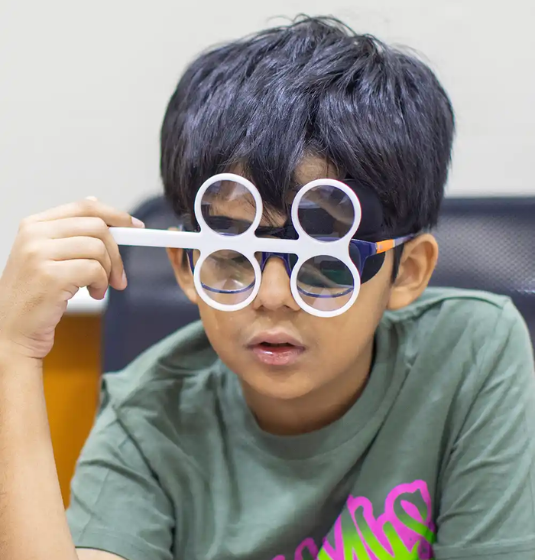
Vision therapy is a personalised, non-surgical programme of eye exercises and activities designed to improve the way the eyes and brain work together. It helps patients develop clearer, more comfortable and more efficient vision.
Vision therapy is a structured programme of visual activities and exercises prescribed by an eye specialist to improve visual skills such as eye tracking, focusing, teaming and visual processing.
It is often recommended for children and adults who experience difficulties with reading, concentration, eye coordination or visual comfort, even when their eyesight appears normal with glasses or contact lenses.
Helps the eyes and brain work together more efficiently for clearer and more comfortable vision.
Each therapy plan is tailored after a detailed visual assessment based on individual needs.
Certain visual difficulties may not improve with glasses alone. Recognising these signs can help you seek the right evaluation at the right time.
Skipping lines, losing place while reading, or avoiding near work.
Tired eyes, headaches or discomfort during reading or screen use.
Difficulty sustaining visual attention during studies or near tasks.
Double vision, covering one eye, or difficulty with depth perception.
Vision therapy is not a one-size-fits-all solution. A detailed visual skills assessment helps identify specific areas that need improvement, such as focusing ability, eye teaming or tracking.
Therapy sessions are carefully planned and guided, with progress monitored regularly so that the programme can be adjusted according to the patient’s response.
Vision therapy strengthens the connection between the eyes and the brain through carefully designed activities. Over time, these exercises help develop more accurate and automatic visual skills.
Understanding the process helps patients and parents stay consistent with both in-clinic sessions and recommended home activities for the best possible outcomes.
Consistent visual habits outside therapy sessions play an important role in reinforcing the skills being developed during the programme, especially for children and students.
Alternate between near and distance tasks and include outdoor time in the daily routine.
Follow the 20-20-20 rule and take regular breaks during prolonged near work.
Maintain a comfortable reading distance and good lighting while studying.
Attend scheduled review visits so progress can be assessed and the plan refined.
If you or your child experiences reading difficulties, eye strain or visual discomfort, a specialised visual assessment can help determine whether vision therapy may be beneficial.
Consult Dr. Monika Garg for specialised vision therapy and paediatric ophthalmology care in Zirakpur.